
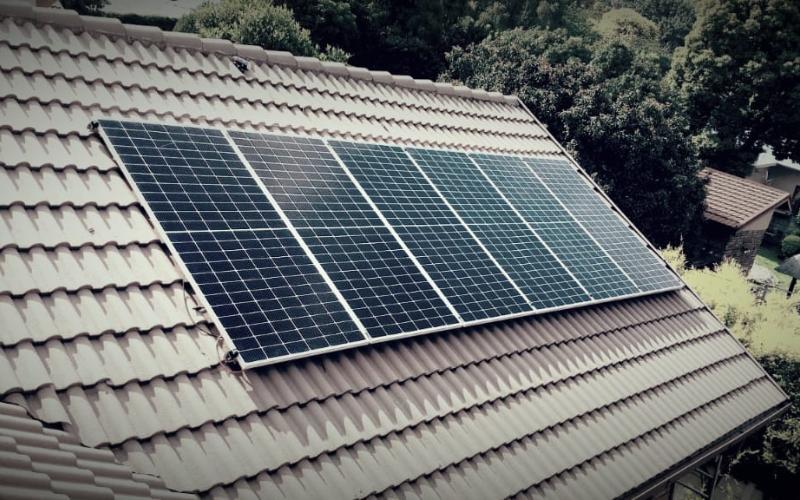
There are three popular solar panel types namely Monocrystalline solar PV panels, Polycrystalline solar PV panels, and Thin-film solar panels. Each of these PV panels is made differently and has differences in appearance, effectiveness, prices, and the installation their best suited for. Depending on your needs, one PV panel may suit your requirements better than the other.
Monocrystalline panels
Typically black in colour, these panels are more efficient than multi-crystalline models of panels. Multi-crystalline panels, however, do have a higher heat tolerance. The main differences in efficiency are primarily based on the specific way each panel is processed. There are, however, many more components which account for this difference in efficiency.
Polycrystalline panels
The solar cells are connected together from multiple pieces of silicon. Smaller bits of silicon are moulded and treated to create the solar cell. This process is less wasteful because hardly any raw material is thrown out during manufacturing. The blended makeup of the cells gives poly panels their iconic blue colour. If you look at them up close, you’ll see the texture and colour is uneven due to the way the cells are made.
Interdigitated back-contact solar cells.
Thin-film
These types of panels are composed of a slim layer of photovoltaic material. The material is often amorphous silicon, cadmium telluride, or copper-indium-gallium-selenide. This slim layer of material sits on top of a base plate of glass or metal. Although it’s still a work in progress as far as its technology goes. It’s overall less efficient than other types of panels. It’s rarely used, because of this is and is often used in smaller devices, such as garden lamps and solar-powered calculators.